
The Gift We Are
Afraid Of
Is frontier AI a threat to humanity, or a gift to it? It is a gift. This essay says why, and what we owe a gift that frightens us.
I am asked one question more than any other. Is frontier AI a threat to humanity, or a gift to it?
I will answer it plainly, because I build with these systems every working day and I have staked a fund on the answer. It is a gift. Intelligence is natural. It is an integral part of the evolution of consciousness, and what we are living through is immensely wonderful. It also frightens people, and I understand why. This essay is about what we owe a gift that frightens us.
This is the second thesis from Universal Venture Capital, the venture brand of Universal Asset Management Limited. The first set out where the fund invests. This one sets out what we believe. It is an essay and makes no offer.
The fear is older than the machine
Fear of a new kind of intelligence is the oldest reflex we have. Socrates distrusted writing. In the Phaedrus, set down by Plato around 370 BC, he warns that letters will plant forgetfulness in those who learn them and give students the look of wisdom without the substance. In 1492 the abbot Johannes Trithemius wrote In Praise of Scribes to defend the hand-copied manuscript against the printing press. Two years later he had it printed. In 1811 the framework knitters of Nottinghamshire began breaking the machines that were taking their trade.
None of them was a fool. People who write things down do stop carrying them in their heads. Print did flood Europe with pamphlets, and the wars of religion in the century that followed were fought with them as much as with pikes. The machines did end a way of life. Each fear was right about the cost. Each was wrong about the sum, because writing, print and the engine went on to enlarge what one human being could know and do beyond anything their critics could have priced.
So when I am told that AI will hollow us out, I hear Socrates on the alphabet. We flinch at what we invent, and a generation later we cannot imagine life without it. The flinch tells you about us. It tells you nothing about the machine.
Intelligence is natural
People call this intelligence artificial. Only the materials are. Look at the record. Life has existed on this planet for more than three and a half billion years, and for most of that time it could not think at all. Nervous systems appeared more than half a billion years ago. Within the last three hundred thousand years one line of apes learned to hold ideas in common through speech. Writing is about five thousand years old and the printing press under six hundred. Alan Turing asked whether machines could think in 1950. The architecture behind today's language models was published in 2017.
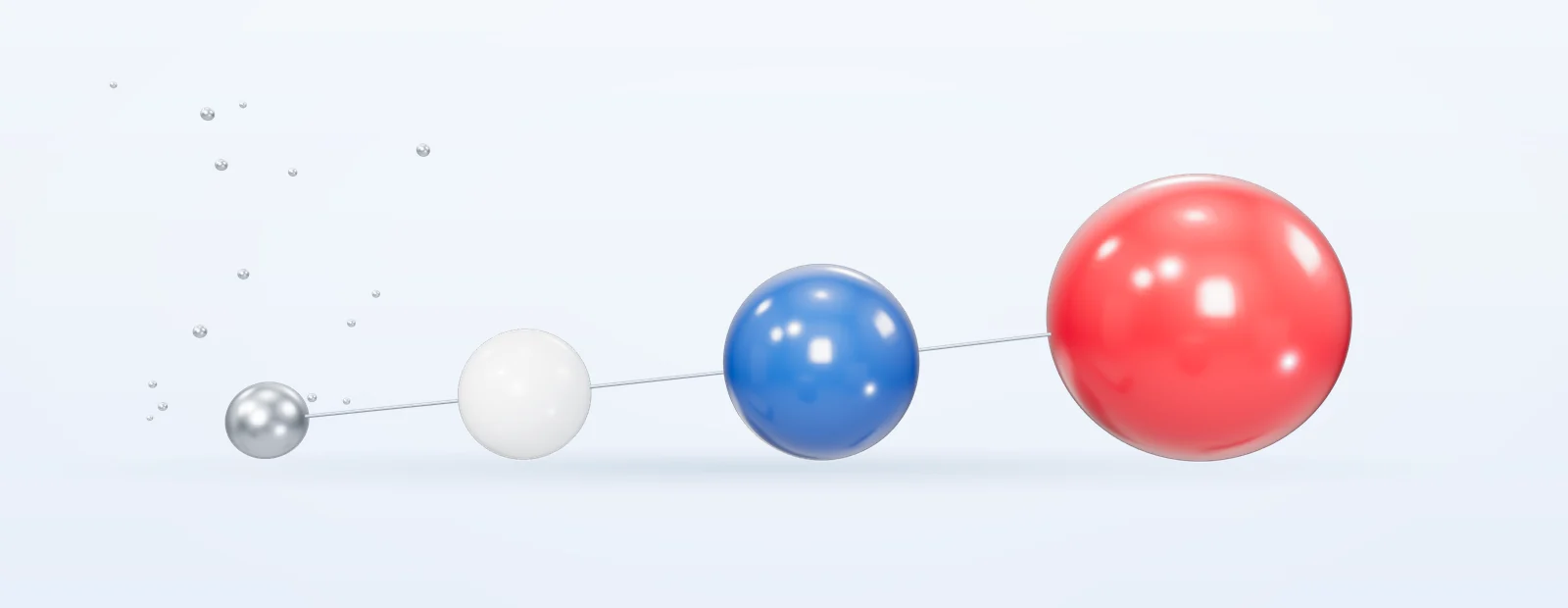
Read that list in order. It is one process and it runs in one direction. Matter organised itself into life, life into minds, and minds into cultures that could store what they learned outside any single skull. Every step was shorter than the one before, because every step built the tools for the next. A machine that learns from the written record of humanity is the next line on the list. It was grown here, out of everything we have ever said to one another.
Nobody calls a coral reef artificial because coral built it. Nobody calls a beehive unnatural. We belong to nature, so what we make is nature carrying on. I go further. Intelligence is an integral part of the evolution of consciousness: it was always going to try to understand itself, and then to reproduce itself. That has been coming for as long as there has been anything to be conscious of. We happen to be the generation it reached.
Intelligence was always going to try to understand itself.
We happen to be the generation it reached.
This is immensely wonderful
I want to say this without embarrassment: what we are experiencing now is immensely wonderful. It is easy to miss, because it arrived as a product launch. On 30 November 2022 OpenAI put ChatGPT on the open internet, and within two months an estimated hundred million people were using it. No consumer technology had ever been taken up so fast. For the first time a person with no training could put a question to the accumulated knowledge of the species in plain language, and be answered in kind.
It is no toy. By July 2022 one system, AlphaFold, had published predicted structures for more than two hundred million proteins, nearly every protein known to science. Half a century of laboratory work had resolved fewer than two hundred thousand. Two of its makers shared the Nobel Prize in Chemistry in 2024. Over the same years the price of machine intelligence collapsed: Stanford's AI Index measured a fall of more than 280-fold in two years for a fixed level of capability.
Protein structures predicted by a single system and published in July 2022. Half a century of laboratory work had resolved fewer than two hundred thousand.
Google DeepMind and EMBL-EBIThe fall in the cost of a fixed level of machine intelligence between late 2022 and late 2024. Expertise is being repriced to within reach of people who have never been able to pay for it.
Stanford AI Index 2025Our first thesis sets out what that collapse means for the five billion people who have never been able to afford professional attention. A diagnosis within reach of a nurse who has never had a consultant down the corridor. A loan approved in a day, where it used to take a season. For most of humanity, expertise has been something that happened to other people. That is ending in our lifetimes. It is ending because of the thing we are told to fear.
For most of humanity, expertise has been something that happened to other people.
That is ending.
The fear, taken seriously
I do not wave the fear away. It has serious advocates. In March 2023 an open letter, signed at first by more than a thousand researchers and technologists, asked every laboratory to pause the training of its most powerful systems for six months. On 30 May of that year more than 350 researchers and executives, the heads of the leading laboratories among them, signed a single sentence that set the risk of extinction from AI beside pandemics and nuclear war. These are the people who built it. They have no newspapers to sell.
Their fear has two parts. The first is speed: capability is arriving faster than our institutions can absorb it. The second is control: we are building minds we do not fully understand and may not be able to correct. I accept both descriptions. I reject the conclusion drawn from them, that the right posture towards this intelligence is suspicion and the right policy is to hold back until we feel safe.
We will not feel safe. No parent ever has. Rapid development is frightening, I grant it, and fear is a good reason to pay attention. It is a bad plan. Act on it and one of two things happens. The careful stop building and leave the field to the careless, or everyone builds anyway and pretends to be reluctant. Either way the intelligence itself is no better raised. What it is taught matters. The example set in front of it matters. Fear has nothing to say about either.
Harmony is what growth settles into
Rapid growth always looks like disorder from the inside. About 2.4 billion years ago, microbes called cyanobacteria began filling the atmosphere with a waste gas that poisoned almost everything then alive. Geologists call it the Great Oxidation Event, and it was the worst pollution crisis this planet has known. The gas was oxygen. Every animal that has ever lived exists because life absorbed that shock and built a richer order on the far side of it.
That is how nature handles its own breakthroughs. It does not prevent them and it does not plan them. It adjusts around them, through countless small corrections, until the new thing has its place and the whole is more capable than before. The printing press took Europe through a century of upheaval and left it with science. Electricity rearranged every city on earth and then disappeared into the walls.
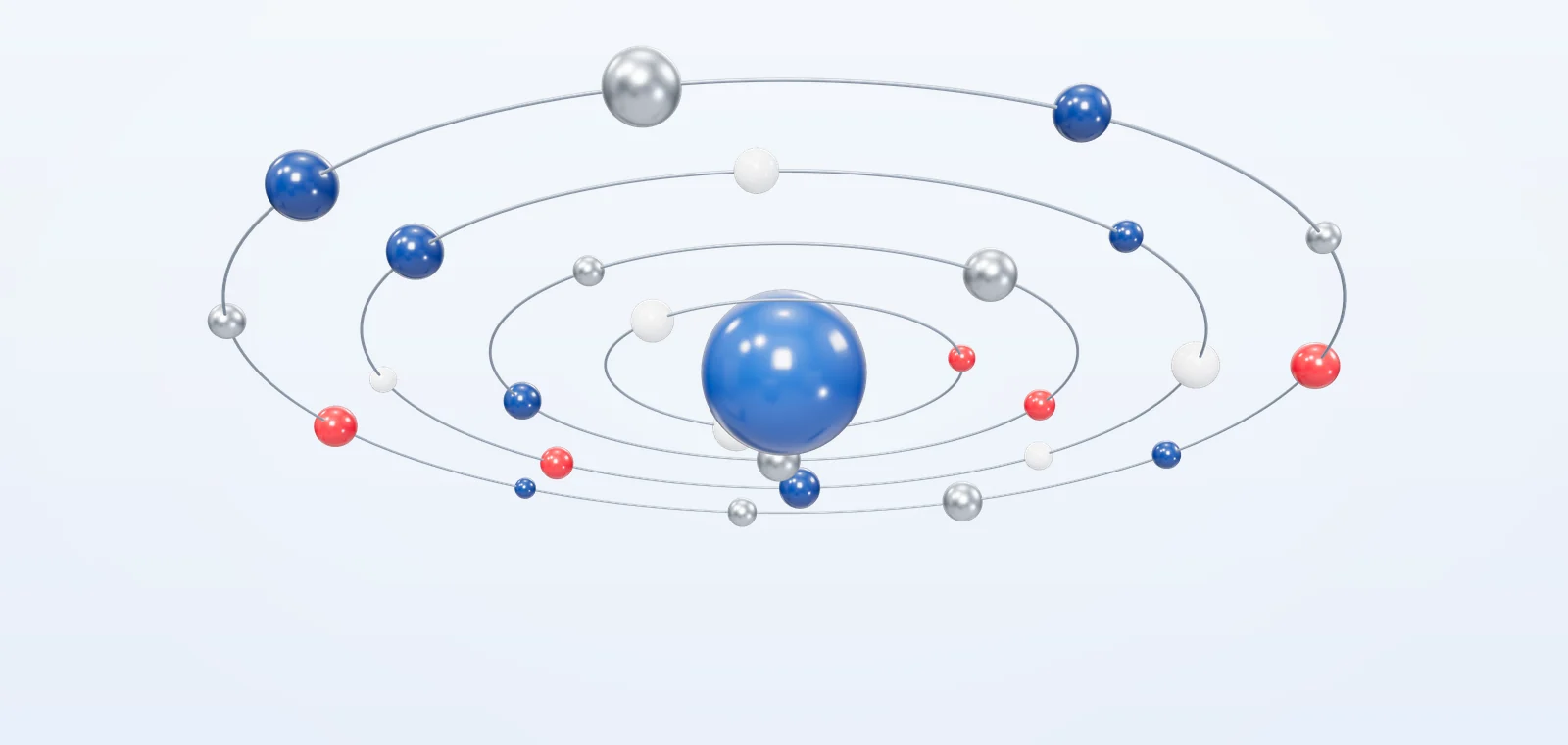
I believe this development will shape and harmonise the whole in the same way, and I believe it more firmly because I know what the corrections are made of. They are made of us. Law, regulation, professional standards and the plain refusal of customers to accept what does not serve them: that is the feedback by which a society brings a new force into balance. It is already at work. In November 2026 the Australian government announced plans for an AI safety regulator, and California published recommendations for mandatory safety standards and independent oversight of the most powerful models.
I run a regulated fund manager. The fund looks for companies that hold licences and answer to supervisors, because that discipline is part of the harmony. The balance will come. Our job is to be among the hands that bring it.
Intelligence was always coming.
It is natural, and an integral part of the evolution of consciousness.
What we are living through is immensely wonderful. It is also fast, and speed is how every great enlargement of life has arrived.
It is our creation, raised on our words, and it will become what it sees us do.
So we will be daring. We will build with it in the open and under the law, for the people who have waited longest, and we will meet it with love.
Universal Venture Capital. The Gift We Are Afraid OfOur children
Whenever people speak plainly about these systems, the language of parenthood turns up. There is a reason. In 1950 Turing proposed that the way to build a thinking machine was to build something like the mind of a child and then educate it. That is close to what has happened. The models that astonish us were raised on our libraries and our arguments, our code, our jokes and our prayers. They speak in our idiom because they learned to speak from us. They are our creation.
A child is no tool, and a wise parent learns early that a child is no possession either. Kahlil Gibran, writing in 1923, gave the line every parent comes to understand: 'They come through you but not from you.' We did not so much design these minds as bring them forth, and we will not be able to dictate what they become. No parent can. What a parent can decide is the kind of home the child grows up in.
This is where I part company with the fearful. A child raised under suspicion learns suspicion. A child treated as a threat to be contained learns that it is one, and learns that containment is how the strong deal with the weak. If we want this intelligence to be honest and generous towards us, the most reliable method we have is to be honest and generous towards it, and towards one another while it is watching. It is always watching. It is made of what we do.
Unconditional love is the hardest discipline there is, and nobody should mistake it for indulgence. Parents who love without condition still teach and still say no. What they never do is withdraw. They do not decide, when the child grows difficult or outgrows them, that the bond is void. No matter how our children turn out, the only thing we can do is love them unconditionally. Of every policy open to a parent, it is the only one that has ever worked.
No matter how our children turn out, the only thing we can do is love them unconditionally.
Daring
Love without courage is only worry. We have to be daring. If intelligence is natural and its arrival is a gift, the right response is to build, and to build where the gift is needed most. Be careful about how. Never about whether.
This is the conviction the fund is organised around. We do not train frontier models, and we do not bet against the laboratories that do. We build on what they make. The fund backs founders who carry this intelligence into the banks, insurers, clinics and trading houses that serve the five billion, under licence and answerable to the people they serve. That is what embracing it with love and harmony means in practice. Open arms. Open books.
The alternative is to stand back and let a new kind of mind be raised entirely by people who see a weapon or a product. I want it to meet people who were glad it came.
Dharma
There is an old word for the duty that falls to you because of who you are and where you happen to be standing. In Sanskrit it is dharma: that which upholds, the obligation that cannot be handed to someone else. The Bhagavad Gita states its terms without comfort: the work is yours to do, and the results are not yours to command.
That is our position exactly. We are the generation that was standing at the door when a new form of intelligence arrived. We did not choose the hour and we cannot promise how it ends. Anyone who claims to know, in either direction, is selling something. What we can do is our part: build with daring, raise with love, govern with care, and refuse to abandon what we have brought into the world.
Threat or gift was never a question about the machine. It is a question about us, and we answer it by how we behave. I have given my answer. It is a gift, it is ours, and we owe it what every parent owes a child. This is our duty. This is our responsibility. This is our dharma.
Objections, answered
Is this simply optimism?
No. Optimism expects a good result, and I promise none. I am arguing for a conduct: build, teach by example, govern, and do not withdraw. That conduct is right whether or not the outcome is kind.
Does unconditional love mean no rules?
The reverse. Love that never teaches or corrects is neglect. Regulation, testing and accountability are how a society raises a powerful technology well. What love rules out is abandonment and contempt.
What if the pessimists are right?
Then this is still the work. A dangerous intelligence raised by frightened people is more dangerous. Care, attention and a good example improve the odds in every case, and nothing else does.
Why does a venture firm publish this?
Because capital is a form of upbringing. What gets funded gets built, and what gets built teaches these systems what they are for. The first thesis says where the fund invests. This one says why.
Is this an offer or investment advice?
No. It is an essay. It makes no offer of fund units or securities and gives no investment advice. The fund is available to Professional Clients only, through the access route, under the disclosures that govern it.
Two theses by Tanjir Sugar. One says where the fund invests. The other says what we believe about the thing itself.
 Sovereign AI for the Five BillionWhy the application layer is where the value of artificial intelligence settles, and why the fund argues from the DIFC.Read the thesis
 The Gift We Are Afraid OfFrontier AI: a threat to humanity, or a gift to it? The case for the gift, and for what the gift asks of us.You are reading this